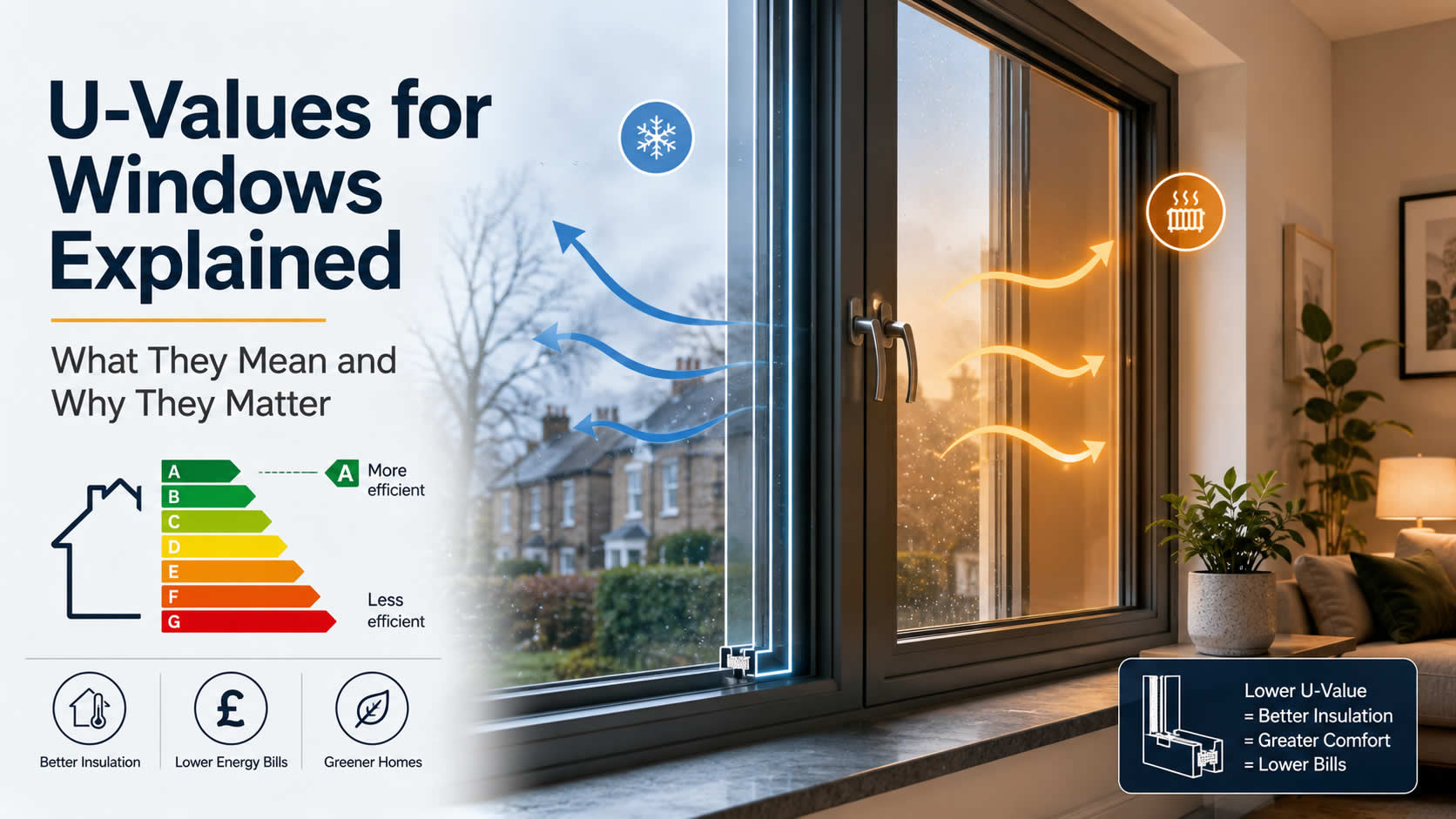
Window U-values can look like another bit of building jargon, but they are one of the simplest ways to understand how well a window keeps heat inside your home. When you are comparing double glazing, triple glazing, replacement windows or new-build glazing, the U-value tells you how much heat can pass through the window.
The lower the U-value, the better the window is at reducing heat loss. That means a window with a U-value of 1.2 W/m²K performs better than one with a U-value of 1.6 W/m²K. It is a small number, but it can make a noticeable difference to comfort, heating demand and long-term energy efficiency.
What Is a Window U-Value?
A U-value measures the rate of heat transfer through a building material. For windows, it shows how easily heat passes through the glass, frame and overall window unit. The measurement is written as W/m²K, which stands for watts per square metre per kelvin.
You do not need to remember the science behind the unit. The important point is simple: a lower U-value means less heat escapes through the window.
Older single-glazed windows usually have poor U-values because there is only one pane of glass between the warm room and the cold outside air. Modern double glazing performs much better because it uses two panes, a sealed cavity, insulating gas and specialist glass coatings. Triple glazing can improve performance again, although it is not always necessary for every home.
Why U-Values Matter for Your Home
Windows are one of the main areas where a home can lose heat. Even when your walls and roof are well insulated, poor glazing can leave rooms feeling cold, draughty and uneven in temperature.
A better window U-value can help with:
- Keeping more warmth inside during colder months
- Reducing the cold feeling close to windows
- Making rooms feel more comfortable and balanced
- Lowering the amount of heat your home needs
- Supporting better energy performance when upgrading a property
- Meeting current Building Regulations for replacement glazing
Good windows are not only about saving money. Comfort matters too. If you sit near a poor window in winter, you may feel cold even when the heating is on. That is often because the glass surface is cold, the frame is underperforming or the window has air leakage around it.
What Is a Good U-Value for Windows?
For replacement windows in England and Wales, a whole-window U-value of 1.4 W/m²K or lower is commonly used as the current performance benchmark under Approved Document L. Some compliant windows may also use Window Energy Ratings as the route to compliance.
As a general homeowner-friendly guide:
- Single glazing is usually poor by modern standards
- Older double glazing can vary widely depending on age and specification
- Modern double glazing often meets current replacement window standards
- High-performance double glazing can achieve lower U-values than basic units
- Triple glazing can offer very low U-values, especially for highly insulated homes
When comparing quotes, always ask whether the stated U-value is for the whole window or just the centre pane of glass. A centre-pane U-value only measures the glass area and does not include the frame. A whole-window U-value gives a more useful view of the complete product.
Whole-Window U-Value vs Centre-Pane U-Value
This is where many homeowners get caught out. A window is not just glass. It also includes the frame, spacer bars, seals and opening sections. These all affect thermal performance.
Centre-Pane U-Value
The centre-pane U-value measures the performance of the glass unit only. It ignores the frame and edge details. Because the centre of the glass is usually the best-performing part of the window, this figure can look more impressive than the performance of the full window.
Whole-Window U-Value
The whole-window U-value measures the full window unit, including the frame and glazing. This is the figure that gives you a more realistic idea of how the window will perform once installed.
When a supplier gives you a very low U-value, ask what it refers to. A good installer should be able to explain the difference clearly.
How Double Glazing Improves U-Values
Modern double glazing works by slowing heat transfer. It usually does this through a combination of features rather than one single part.
The main performance features include:
- Two panes of glass instead of one
- A sealed gap between the panes
- Argon or another insulating gas inside the cavity
- Low-emissivity glass coatings that reflect heat back into the room
- Warm edge spacer bars around the glass unit
- Better frame design and improved seals
The quality of the frame matters as much as the glass. A strong glass unit fitted into a poor frame will not deliver the same performance as a well-designed window system.
Are Triple-Glazed Windows Always Better?
Triple glazing can deliver lower U-values than double glazing, but that does not automatically mean it is the best choice for every property.
Triple glazing may be worth considering when:
- The property is very exposed
- The home is being upgraded to a high energy standard
- Large areas of glass are being installed
- You want to reduce the cold surface feeling near windows
- Noise reduction is also part of the specification
For many UK homes, high-quality double glazing can still be the more practical option. It is usually lighter, more affordable and easier to fit into standard openings. The right choice depends on the property, budget, frame material, room layout and the level of performance you want.
U-Values and Window Energy Ratings
A U-value is important, but it does not tell the whole story. Window Energy Ratings look at more than heat loss. They can include the U-value, solar gain and air leakage to give a broader picture of window performance.
Solar gain is the heat your home receives from sunlight through the glass. Air leakage measures how much air can pass through gaps in the window. A window with a strong energy rating should balance insulation, useful solar heat and airtightness.
That is why two windows with similar U-values can still perform differently in real life. The glass, frame, seals, orientation and installation quality all matter.
Does Installation Affect the U-Value?
The product specification is only part of the result. A well-made window still needs to be installed properly. Poor fitting can leave gaps, cold spots and draughts around the frame. That can reduce the real-world benefit of choosing a better-performing window.
Good installation should include accurate measuring, correct fixing, proper sealing and suitable finishing around the opening. The aim is to make the window perform as part of the building, not just as a product in isolation.
What U-Value Should You Look for When Replacing Windows?
For most replacement window projects, look for a modern, compliant whole-window U-value and ask the installer to confirm how the product meets Building Regulations. A whole-window U-value of 1.4 W/m²K or lower is a common target for replacement windows in England and Wales, but local requirements and project details should always be checked before work starts.
You should ask these questions before choosing windows:
- Is the U-value for the whole window or only the glass?
- What Window Energy Rating does the product have?
- Does the quote include Building Regulations compliance?
- What frame material is being used?
- Does the glass include a low-emissivity coating?
- Are warm edge spacer bars included?
- Who will certify the installation?
These questions help you compare quotes properly. A cheaper window may not offer the same performance, specification or compliance route as another product that looks similar at first glance.
Do Lower U-Values Save Money?
Lower U-values can help reduce heat loss, which can reduce the amount of heating your home needs. The exact saving depends on your property, heating system, window area, insulation, fuel cost and how you use your home.
The biggest difference is often felt when replacing single glazing or very old double glazing. In those cases, new energy-efficient windows can improve comfort quickly because the room feels warmer and less draughty.
If your existing windows are already modern and performing well, the saving from upgrading again may be smaller. That is why it is worth looking at the whole property before making a decision. Loft insulation, wall insulation, doors, ventilation and heating controls can all affect how much benefit you get from better windows.
Common Mistakes When Comparing Window U-Values
Homeowners often make decisions based on one number, but window performance needs a wider look.
Only Looking at the Glass
The glass unit matters, but the frame and installation matter too. A centre-pane figure can make a product look better than the full window performance.
Assuming Triple Glazing Is Always the Best Option
Triple glazing can be excellent, but a high-quality double-glazed window may be a better fit for many homes. The right answer depends on the property and budget.
Ignoring Ventilation
More airtight windows can improve comfort, but homes still need proper ventilation. Trickle vents, extractor fans and background ventilation should be considered as part of the project.
Comparing Quotes Without Checking Specification
Two quotes can describe “A-rated windows” or “energy-efficient glazing” but include different frame systems, glass units, spacer bars and guarantees. Ask for the detail before choosing.
Final Thoughts
U-values are a useful way to compare window insulation. The lower the number, the better the window is at reducing heat loss. For replacement windows, the key is to look for a compliant whole-window U-value, not just an impressive glass-only figure.
Good windows can make your home warmer, more comfortable and more efficient. The best result comes from choosing the right specification, using a reliable installer and making sure the finished work is properly sealed, certified and suited to your property.
If you are planning to replace your windows, ask for the whole-window U-value, Window Energy Rating and full product specification before you agree to the work. It will help you make a clearer decision and avoid paying for performance you are not actually getting.