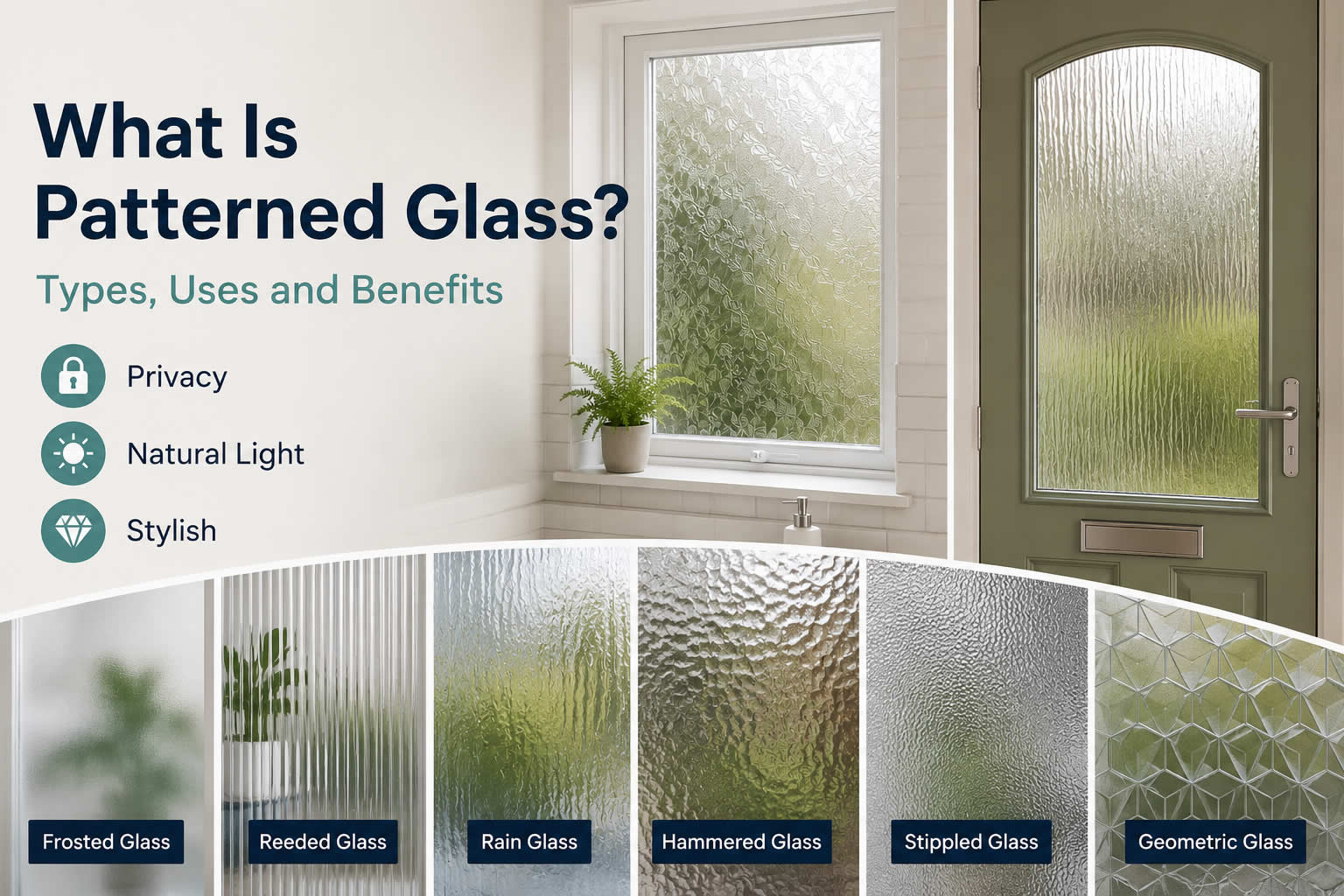
Patterned glass is a type of decorative glass designed with a textured, printed or embossed surface. Instead of being completely clear, it distorts the view through the glass while still allowing natural light to pass through. That makes it a popular choice for bathrooms, front doors, internal partitions, offices, stairwells and any area where privacy matters.
It can be subtle, bold, traditional or modern depending on the pattern. Some styles create a soft frosted appearance, while others use deeper textures such as reeded, hammered, rain, stippled or geometric designs. The main purpose is usually the same: to provide privacy without making a room feel dark or closed in.
What Is Patterned Glass?
Patterned glass is glass that has a raised, rolled, etched or textured design on one or both sides. The pattern changes how light passes through the pane. It blurs shapes, softens visibility and adds a decorative finish to the glass.
Unlike clear glass, patterned glass is not used when you need a completely open view. It is chosen when you want light, privacy and style at the same time. It can be used as single glazing, double glazing or as part of a toughened safety glass unit depending on where it is being installed.
Patterned glass is sometimes called obscure glass, privacy glass or decorative glass. These terms are often used together, although they do not always mean exactly the same thing. Obscure glass focuses on privacy. Patterned glass focuses on the design and texture. Decorative glass can include patterned, coloured, bevelled or stained glass options.
How Patterned Glass Works
Patterned glass works by disrupting the view through the pane. The surface texture bends and scatters light, which makes objects on the other side appear blurred or distorted.
The deeper or denser the pattern, the more privacy it provides. A light texture may only soften the view slightly, while a heavier pattern can make it very difficult to see through the glass clearly.
Most patterned glass still lets plenty of daylight into the room. That is one of its biggest advantages. You can add privacy without blocking natural light in the same way that curtains, blinds or solid panels might.
Common Types of Patterned Glass
There are many styles of patterned glass. Some are designed to look clean and minimal, while others are more decorative. The right choice depends on the property, the room and the amount of privacy required.
Frosted glass
Frosted glass has a smooth, cloudy finish that reduces visibility while keeping the look simple and modern. It is often used in bathrooms, office partitions, internal doors and entrance panels.
The finish can be created through acid etching, sandblasting or specialist film. Frosted glass is a good option when you want privacy without a strong visible pattern.
Reeded or fluted glass
Reeded glass, also called fluted glass, has vertical grooves running through the surface. It has become very popular in modern interiors because it adds texture without looking too heavy.
It is often used for shower screens, kitchen cabinets, room dividers, internal doors and feature glazing. It gives privacy from certain angles while still feeling light and stylish.
Stippled glass
Stippled glass has a fine, uneven texture that creates a soft blurred effect. It is a traditional privacy glass option and works well in bathrooms, utility rooms and side windows.
The pattern is usually not too bold, so it suits homes where the glass needs to be practical rather than a major design feature.
Rain glass
Rain glass has a flowing texture that looks like water running down the pane. It is decorative, soft and effective at distorting the view.
This type of patterned glass is often used in bathrooms, door panels and decorative internal glazing. It works especially well where you want a natural, water-like effect.
Hammered glass
Hammered glass has a surface that looks slightly uneven, as if it has been lightly struck or shaped. It creates a traditional decorative effect and gives a good level of privacy.
It can suit period properties, cottage-style homes and doors where a more characterful finish is needed.
Geometric patterned glass
Geometric patterned glass uses repeated shapes, lines or decorative designs. These patterns can be subtle or highly decorative depending on the style.
It is often used where the glass needs to form part of the interior design, not just provide privacy. It can work well in hallways, internal screens and feature doors.
Wired patterned glass
Wired glass has a metal mesh set within the pane. Some versions also have a patterned surface. It is usually chosen for specific safety or fire-related applications rather than purely for appearance.
Not every wired glass product is suitable for every location, so it should be specified properly before installation.
Where Is Patterned Glass Used?
Patterned glass is used in homes, commercial buildings and public spaces. It is useful anywhere you want to keep light moving through the property while limiting visibility.
Bathroom windows
Bathrooms are one of the most common places for patterned glass. It allows daylight into the room while giving privacy from neighbouring homes, gardens or streets.
Heavier obscure patterns are usually best for bathrooms, especially where the window is overlooked.
Front doors and side panels
Patterned glass is often used in entrance doors, fanlights and side panels. It helps brighten the hallway while stopping people from seeing directly into the home.
For front doors, the glass can also become part of the design. Traditional homes may suit decorative textured glass, while modern properties often work better with frosted or reeded panels.
Internal doors
Internal doors with patterned glass can make a home feel brighter and more open. They are useful between hallways, kitchens, dining rooms and living spaces where you want borrowed light without fully exposing the room.
This is especially useful in darker properties, terraces or homes with long corridors.
Shower screens
Reeded, frosted and other privacy glass styles are commonly used in shower screens. They can soften the look of the bathroom while reducing visibility.
Patterned shower glass can also help hide water marks more effectively than completely clear glass, although it still needs regular cleaning.
Office partitions
Patterned glass works well in offices because it creates privacy without making rooms feel boxed in. Frosted glass is often used for meeting rooms, private offices and reception areas.
It helps divide space while keeping a bright, professional appearance.
Kitchen cabinets and display units
Reeded and fluted glass are popular choices for kitchen cabinet doors. They hide the contents slightly while giving the kitchen a more designed, textured look.
This can be useful when you want glass-fronted cabinets but do not want everything inside to be fully visible.
Stairwells and landings
Patterned glass can be used around staircases, landings and internal screens to improve light flow. It can make a hallway feel brighter while still giving separation between areas.
Benefits of Patterned Glass
Improved privacy
The main benefit of patterned glass is privacy. It stops people from seeing clearly through the glass, making it ideal for bathrooms, entrance doors, offices and overlooked windows.
Different patterns provide different levels of privacy. A light texture may only blur the view slightly, while a dense obscure pattern gives a much stronger privacy effect.
Natural light
Patterned glass allows natural light to pass through. This makes it a practical alternative to curtains, blinds, solid doors or opaque panels.
It can help keep rooms bright while still making the space feel private.
Decorative style
Patterned glass can improve the appearance of a window, door or interior feature. It adds texture and interest without needing heavy decoration.
Modern reeded glass can give a clean architectural feel. Traditional designs can help suit period properties. Frosted glass can create a simple and understated finish.
Flexible design options
There are many levels of pattern, privacy and finish available. That means patterned glass can be used in both modern and traditional properties.
It can be subtle enough for a minimalist home or decorative enough to become a feature.
Useful for awkward spaces
Some windows are difficult to dress with curtains or blinds. Small bathroom windows, door side panels, landing windows and internal glass panels may all benefit from patterned glass.
Because the privacy is built into the glass, there is no need to rely on additional coverings.
Works with double glazing
Patterned glass can be used within double-glazed units. That means homeowners do not have to choose between privacy and energy efficiency.
For replacement windows and doors, patterned glass can be specified as part of a modern glazing unit with suitable thermal performance and safety features.
Does Patterned Glass Give Complete Privacy?
Patterned glass gives privacy, but it does not always create total privacy in every condition. Light levels can affect how much can be seen through the glass.
For example, if a bathroom is brightly lit at night and the outside is dark, shapes and movement may still be visible through some types of obscure glass. A heavier privacy pattern will reduce this more effectively than a light texture.
Where full privacy is essential, choose a higher-obscurity glass or combine the glass with blinds, film or careful positioning.
Is Patterned Glass the Same as Frosted Glass?
Frosted glass is one type of privacy glass, but it is not the only type of patterned glass. Frosted glass usually has a cloudy, smooth or matt finish. Patterned glass may have a visible texture, raised design or decorative surface.
Both can reduce visibility. The difference is mainly in appearance and how the privacy effect is created.
Can Patterned Glass Be Toughened?
Patterned glass can often be supplied as toughened safety glass, depending on the product and application. Toughened glass is important in areas where safety glass is required, such as doors, low-level glazing, shower screens and certain internal panels.
The correct safety specification should always be checked before ordering. The location of the glass, the size of the pane and how it will be used all affect what type of glass is suitable.
Can You Replace Clear Glass with Patterned Glass?
In many cases, clear glass can be replaced with patterned glass. This is common in bathroom windows, front doors, side panels and internal doors.
If the existing window or door is double glazed, the full sealed glass unit will usually need to be replaced rather than only one pane. The new unit can then be made with the chosen patterned glass and installed into the existing frame if the frame is still suitable.
For older windows, damaged frames or poor seals, it may be better to replace the full window or door rather than only the glass.
How to Choose the Right Patterned Glass
The best patterned glass depends on how much privacy you need, where the glass is being fitted and what style suits the property.
For bathrooms, privacy should be the priority. For front doors, privacy and appearance both matter. For internal screens, the design may be just as important as the level of obscurity.
Before choosing, think about:
- How overlooked the window or door is
- Whether the room will be brightly lit at night
- How much daylight you want to keep
- Whether the glass needs to be toughened or laminated
- Whether the pattern suits the age and style of the property
- Whether the glass will be used in a double-glazed unit
It is also worth viewing samples before making a final decision. Patterned glass can look different in a showroom than it does once fitted into your own home.
Is Patterned Glass Easy to Clean?
Most patterned glass is easy to clean, but textured surfaces may need a little more care than plain glass. Dust, soap residue and water marks can settle into deeper patterns, especially in bathrooms and shower areas.
A soft cloth, warm water and a suitable glass cleaner are usually enough for everyday cleaning. Avoid harsh abrasive pads, especially on specialist finishes, films or coated glass.
Final Thoughts
Patterned glass is a practical and attractive way to add privacy without losing natural light. It works well in bathrooms, entrance doors, internal doors, offices, shower screens and decorative glazing features.
The right type of patterned glass can make a room feel brighter, more private and more finished. From simple frosted glass to modern reeded designs and traditional obscure patterns, there are options to suit almost every type of property.
When choosing patterned glass, look beyond the design alone. Think about privacy, safety, energy efficiency, cleaning and where the glass will be installed. A well-chosen patterned glass unit can improve both the appearance and usability of your home for years to come.